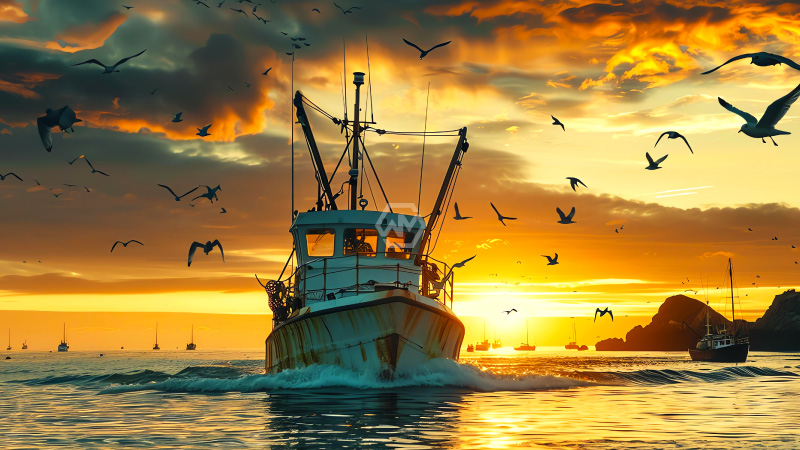
- Factory trawlers with foreign origins now dominate parts of British Columbia’s offshore fishery.
- These vessels pose a threat to endangered killer whales by targeting key prey like chinook salmon.
- A 13-year data analysis reveals an ecological footprint as large as Ireland on B.C.’s coast.
A multi-year investigation led by Pacific Wild has unveiled the growing presence of industrial factory trawlers off British Columbia’s coast, many of which originated from the North Atlantic before being re-flagged as Canadian.
Critics warn that these ships, some of which contributed to the collapse of Atlantic cod stocks, are now threatening fragile Pacific ecosystems. The bottom trawling method used by the vessels not only disrupts ancient sponge reefs, but also captures non-target species, including century-old rougheye rockfish.
Net Loss: The Environmental Toll of Factory Trawlers off B.C.’s Coast
The origins of these trawlers trace back to the collapse of Atlantic fisheries in the 1990s. Vessels like the Frosti and Sunderoey, once active in European and Arctic waters, began arriving on B.C.’s coast in 2009. Using corporate quotas rather than traditional licenses, these ships represent a shift away from owner-operator fishing, concentrating control in the hands of large companies like Independent Seafood Canada Corporation (ISCC).
AIS tracking data collected over more than a decade showed consistent overlap between trawling paths and chinook migration routes, particularly in the Strait of Juan de Fuca. This corridor is a primary feeding ground for southern resident killer whales, whose population has now fallen to just 73 individuals. In 2023 alone, trawlers accidentally netted over 28,000 chinook salmon, triple the average from previous years.
Environmental scientists also warn of climate implications tied to bottom trawling. By scraping the ocean floor, the practice may release carbon stored in sediments—potentially negating carbon-reduction efforts. Moreover, habitat destruction from repeated net passes can take decades to recover, particularly in sensitive areas like glass sponge reefs, which date back thousands of years.
While Fisheries and Oceans Canada (DFO) insists that bycatch is monitored and habitats are protected, many environmental groups argue that there is a lack of transparency around actual practices. Much of the catch and discard data remains inaccessible to the public, fueling criticism that the regulatory framework fails to match the scale and speed of industrial fishing activity now present in B.C.’s waters.
As B.C.’s fisheries enter a new era dominated by corporate-driven trawlers, urgent attention is needed to balance economic interests with ecological responsibility.
“We won’t have a society if we destroy the environment.” — Margaret Mead