
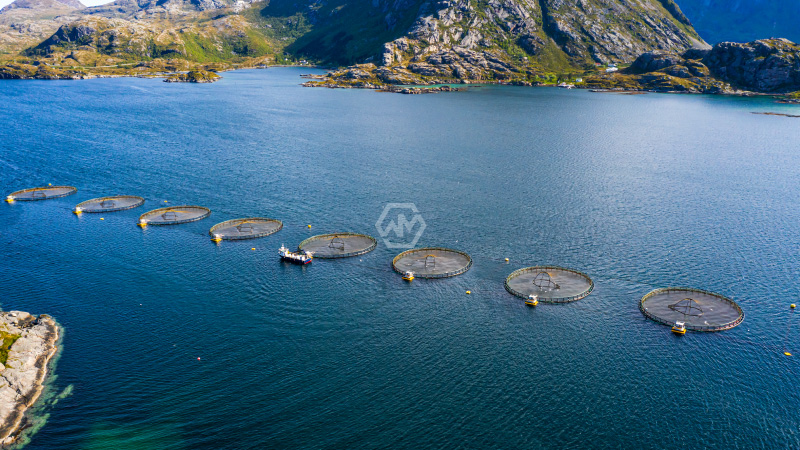
- A new peer-reviewed study finds minimal impact of salmon farms on wild Pacific salmon in British Columbia.
- The research critiques earlier findings that linked farmed pathogens to wild population drops.
- Authors argue removing salmon farms by 2029 may not aid wild salmon recovery.
A newly published scientific paper has cast doubt on two decades of research connecting British Columbia’s salmon farms to the decline of wild Pacific salmon.
The study, featuring contributors from U.S. states where commercial marine net pen farming is banned, counters a recent influential review by marine biologist Martin Krkošek.
BC Salmon Farms May Have Little Effect on Wild Stocks, New Research Suggests
This alternative scientific perspective arrives at a critical time, as Canada’s federal government moves forward with plans to phase out open-net salmon farming. The authors challenge the rationale behind this policy, stating that it is based on theoretical risk models rather than empirical evidence of population-level effects. They argue that salmon farming has become a scapegoat in a more complex ecological crisis affecting wild fish populations.
The paper titled “Pathogens From Salmon Aquaculture in Relation to Conservation of Wild Pacific Salmon in Canada: An Alternative Perspective” highlights how the difference between “risk” and “impact” has been blurred in past scientific discourse. According to the authors, the mere presence of pathogens does not equate to meaningful damage without clear links to population decline. They suggest that policymakers need to rely more on measurable outcomes when shaping future conservation efforts.
Critically, five of the six authors are based in U.S. states where net pen farming is prohibited, adding weight to the argument that their support for aquaculture’s minimal impact is not driven by industry bias. Nevertheless, critics argue the study is influenced by its lead author’s long-standing ties to the salmon industry. Around 70% of Dr. Marty’s current consultancy work supports aquaculture operations, a fact that has drawn scrutiny from conservation groups.
Still, the study opens the door for a more nuanced debate about salmon conservation in Canada. With climate change, overfishing, and habitat degradation presenting clear and present dangers, the researchers propose that targeting salmon farms might distract from more pressing threats. As wild salmon populations face multifaceted challenges, the call is growing for policies grounded in holistic, evidence-based science.
This new study reshapes the dialogue on salmon farming and conservation by urging a closer examination of evidence and prioritizing impact over assumed risk.
“What gets measured gets managed.” – Peter Drucker