
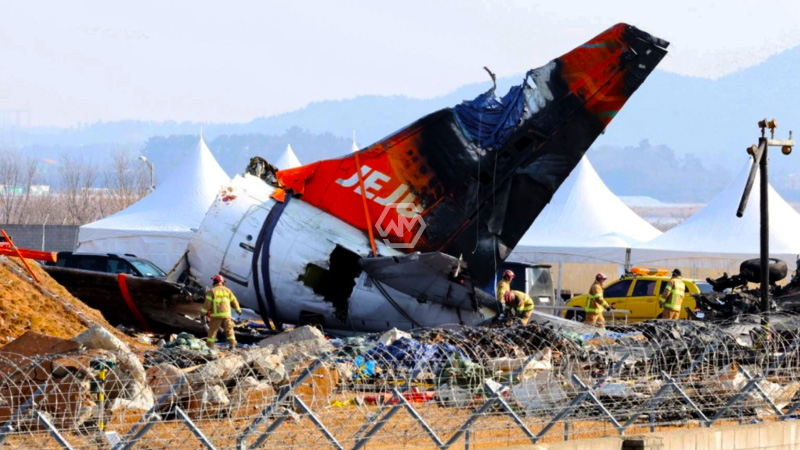
- Jeju Air pilots mistakenly shut off the functional engine during an emergency.
- The crash killed 179 passengers and is now under intense investigation.
- Families and experts are questioning the depth and direction of the probe.
Investigators have revealed that the pilots of Jeju Air Flight 2216 shut down the aircraft’s functioning engine following a bird strike, leaving the damaged one running.
While the preliminary findings focus on pilot error, families of the victims and aviation experts argue that the situation may have involved deeper systemic issues.
Engine of Disaster: What Really Went Wrong on Jeju Air Flight 2216
The crash occurred shortly after takeoff when a bird strike compromised the right engine. In the minutes that followed, the flight crew, relying on visual cues and cockpit readings, made the fateful decision to shut off the left engine, which was still operable. This error left the aircraft without enough propulsion to safely return to the airport or remain airborne.
Data recovered from the flight’s black box indicates there was confusion in the cockpit regarding which engine had failed. Investigators are examining whether visual obstructions or design flaws in engine performance indicators contributed to the pilots’ mistake. The airline has yet to release a full response, citing the ongoing investigation.
In a surprising turn, South Korea’s Aviation and Railway Accident Investigation Board (ARAIB) postponed its official briefing due to protests from families. Many believe the current report disproportionately blames the pilots without examining structural and procedural failures that may have increased the risk of misjudgment under pressure.
This tragedy has renewed global calls for advanced pilot training focused on engine failure under asymmetrical damage scenarios. Aviation safety advocates are also urging manufacturers to incorporate clearer, more intuitive diagnostic systems to prevent similar misinterpretations in the future.
The Jeju Air disaster underscores the devastating consequences of split-second decisions under pressure—and the urgent need for reforms that support pilots when every moment counts.
“In aviation, there’s rarely a single cause—only a chain of missed warnings.” — Anonymous Safety Analyst