
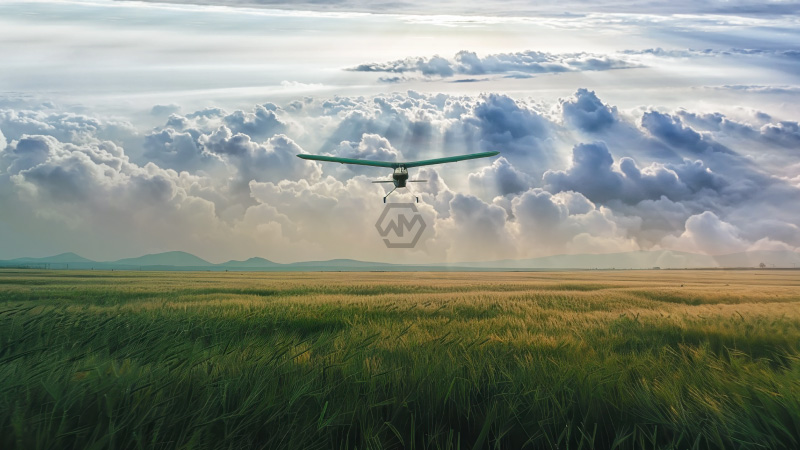
- India tests drone technology for artificial rain in Jaipur’s Ramgarh Dam area.
- 60 drones to disperse rain-inducing chemicals into moisture-rich clouds.
- Aims to aid agriculture in drought-prone regions of Rajasthan.
In a groundbreaking weather experiment, Rajasthan has become the first state in India to attempt cloud seeding using drones instead of conventional aircraft.
The decision to deploy drones was driven by their precision, lower costs, and ability to target smaller geographic areas. Unlike airplanes, drones can be launched rapidly in response to emerging weather conditions, making them ideal for Rajasthan’s unpredictable monsoon patterns.
India’s First Drone Cloud Seeding Trial Takes Off in Rajasthan
Why Drones Matter: Traditional cloud seeding in India has relied on aircraft, which require significant fuel, operational costs, and advance planning. Drones provide a nimble alternative, allowing weather teams to act within minutes when optimal cloud conditions appear.
Science Behind the Method: Cloud seeding works by introducing microscopic particles into clouds, which act as condensation nuclei. Moisture clings to these particles, forming droplets heavy enough to fall as precipitation.
Approvals and Safety: The project received clearance from the Directorate General of Civil Aviation, India Meteorological Department, and local administrative bodies, ensuring both airspace safety and environmental compliance.
Past Challenges: Previous aerial cloud seeding projects in Rajasthan and other states have failed when cloud moisture was insufficient. By using drones, scientists hope for better timing and targeting to avoid such setbacks.
Rajasthan’s drone-led cloud seeding trial could mark a turning point in India’s climate resilience strategy, offering new hope for farmers battling water scarcity.
“Innovation is the ability to see change as an opportunity, not a threat.” — Steve Jobs