
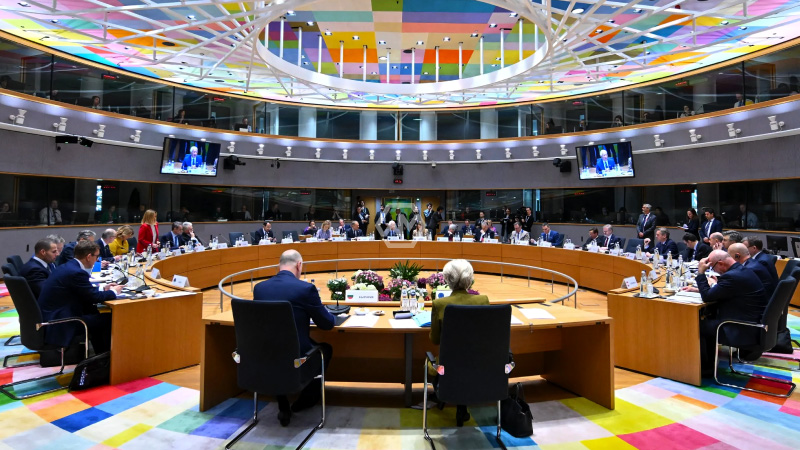
- European Council confirms Bulgaria has met all euro adoption requirements.
- Final legal approval expected from EU institutions by July 8, 2025.
- Bulgaria to officially adopt the euro on January 1, 2026.
Bulgaria has reached a major economic milestone with the European Council’s endorsement of its euro area accession, scheduled for January 1, 2026.
The path ahead includes the adoption of three legal acts by the Council of the European Union, following consultations with both the European Parliament and the European Central Bank.
Bulgaria’s Eurozone Entry Approved: Countdown to 2026 Begins
The political consensus around Bulgaria’s eurozone bid underscores growing trust in its macroeconomic stability. Prime Minister Rosen Zhelyazkov confidently predicted full support ahead of the summit, and his forecast proved accurate. His government has prioritized inflation control, public debt reduction, and exchange rate stability, aligning the nation with the euro area’s fiscal expectations.
Aside from domestic preparation, Bulgaria’s move comes at a time of evolving geopolitical strategy within the EU. The same summit extended sanctions on Russia, reflecting the bloc’s united stance on external threats. While Hungary initially resisted the renewal, last-minute diplomacy ensured consensus, maintaining the freeze on €200 billion in Russian central bank assets.
Yet unity was not absolute. Plans for a new, more aggressive 18th sanctions package stalled due to Slovakia’s opposition. Prime Minister Robert Fico remains firmly against cutting off Russian gas imports, citing Slovakia’s dependency and economic vulnerabilities. This disagreement highlighted the continuing rift within the EU on energy policy.
Despite broader geopolitical friction, Bulgaria’s accession is viewed as a symbol of resilience and European cohesion. The transition to the euro is expected to increase investor confidence, ease cross-border trade, and anchor Bulgaria more firmly within the EU’s economic core. For citizens, the adoption will also simplify travel and financial transactions across the continent.
Bulgaria’s greenlight for euro adoption marks a defining step toward deeper European integration, positioning the country for a more robust economic future within the EU.
“The euro is a symbol of European unity, stability and prosperity.”
— Christine Lagarde, President of the European Central Bank