
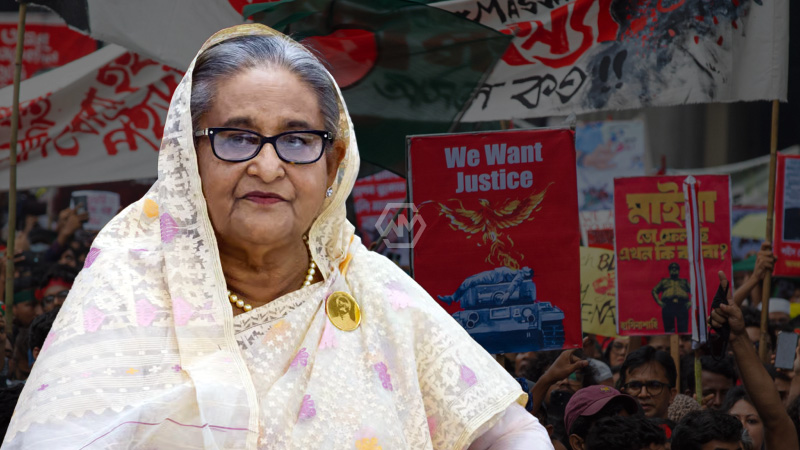
- Former Bangladesh PM Sheikh Hasina sentenced to six months for contempt by ICT.
- Tribunal claims Hasina undermined judiciary integrity post-ouster in 2024.
- Ruling deepens political tensions as charges of crimes against humanity await trial.
In a historic decision, the International Crimes Tribunal-1 of Bangladesh sentenced former Prime Minister Sheikh Hasina to six months in prison for contempt of court.
Hasina, currently residing in India under security protection, has denied all allegations through her legal counsel. This latest ruling comes amid broader legal proceedings where she faces charges of complicity in state violence during the 2024 crackdown on protests, which resulted in over 1,400 deaths.
From Power to Prosecution: Hasina’s Fall Echoes Across Bangladesh’s Shifting Political Landscape
The tribunal’s ruling also included a two-month sentence for Shakil Akand Bulbul, a political activist accused of aiding in the dissemination of Hasina’s contentious statements. This signals the tribunal’s wider intent to address perceived contempt and enforce judicial accountability beyond high-profile figures. Legal experts note the ruling may set a precedent for silencing opposition voices under the guise of court dignity.
Sheikh Hasina’s initial role in establishing the ICT in 2008 was praised internationally for addressing wartime atrocities. However, critics argue the tribunal has since been repurposed for political means, particularly following a sweeping reshuffle in its structure by the interim administration led by Chief Adviser Mohammed Yunus. This restructuring raised concerns about impartiality and judicial independence in post-Hasina Bangladesh.
The current legal climate marks a dramatic reversal for Hasina, who held power for over a decade and positioned herself as a stabilizing figure in a volatile region. Her sudden fall from leadership came after a student-led uprising sparked by alleged corruption, censorship, and police brutality. Despite curfews and military enforcement, the protests culminated in her resignation and hasty escape to India via helicopter.
As the country braces for further legal proceedings, analysts suggest that the upcoming months could redefine Bangladesh’s political future. With opposition groups emboldened and the Awami League under pressure, public sentiment remains divided. The interim government faces mounting scrutiny over its approach to justice, governance, and civil liberties in the wake of Hasina’s dramatic exit.
Sheikh Hasina‘s sentencing represents more than a legal milestone—it marks a pivotal chapter in Bangladesh’s ongoing struggle between justice, power, and political transformation.
“Justice should not only be done, but should manifestly and undoubtedly be seen to be done.” – Lord Chief Justice Hewart