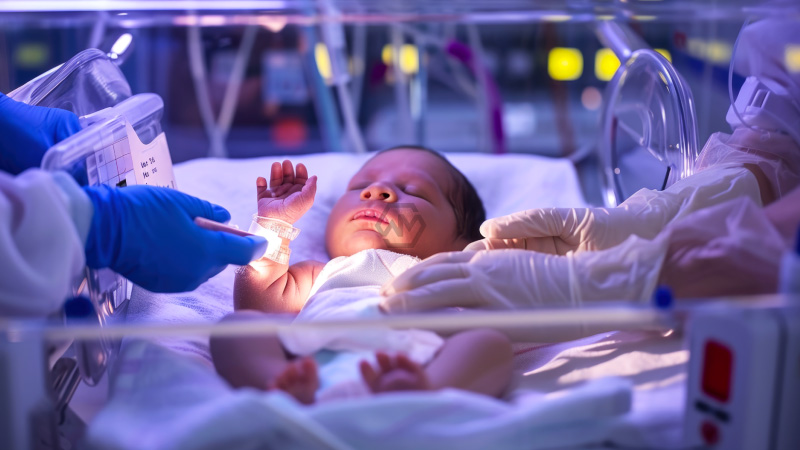
- A UK-based IVF trial has led to the birth of 8 healthy babies without mitochondrial disease.
- The technique uses donor mitochondria to prevent inherited disorders.
- Experts hail the method as a major step forward in reproductive genetics.
A pioneering in-vitro fertilization (IVF) method has successfully resulted in eight healthy births in the UK, offering hope to families at risk of passing on mitochondrial diseases.
While still limited to specific high-risk cases in the UK, this technique has ignited global ethical debates. Some critics question the implications of “three-parent” genetics, despite the donor contributing less than 0.1% of the DNA.
UK’s IVF Innovation Offers New Hope Against Inherited Genetic Disorders
This revolutionary IVF process, known as mitochondrial donation therapy, was conducted at the Newcastle Fertility Centre and is the first of its kind to be legally authorized. Out of 22 women selected for the trial, eight delivered healthy children who are now being observed as part of an extended study to assess their long-term well-being. The children’s mitochondrial DNA shows drastically lowered mutation levels—well below thresholds known to cause disease.
The method specifically targets mitochondrial diseases, which affect approximately one in every 5,000 births and currently have no cure. By swapping only the defective mitochondria and preserving the parents’ nuclear DNA, the child remains genetically tied to both biological parents. This approach minimizes the risk of devastating symptoms like fatigue, developmental delays, and organ failure.
Despite its medical promise, the technique is not without controversy. Critics, including religious groups, express concern over the destruction of embryos and the perceived slippery slope toward genetic modification. However, UK authorities maintain strict guidelines that limit the procedure to cases where the risk of disease transmission is extremely high, preventing misuse of the technology.
The success of this IVF method has also sparked interest in other countries, although many have yet to approve similar treatments. The United States and France continue to prohibit mitochondrial donation, citing unresolved ethical and scientific questions. Nonetheless, the trial’s outcome has reinforced the importance of international dialogue on safe and ethical applications of reproductive science.
This landmark IVF breakthrough signals a new era in reproductive health, offering families affected by mitochondrial disease a promising path to having healthy, genetically related children.
“The greatest of all miracles is that we need not be tomorrow what we are today.” – Jim Rohn