
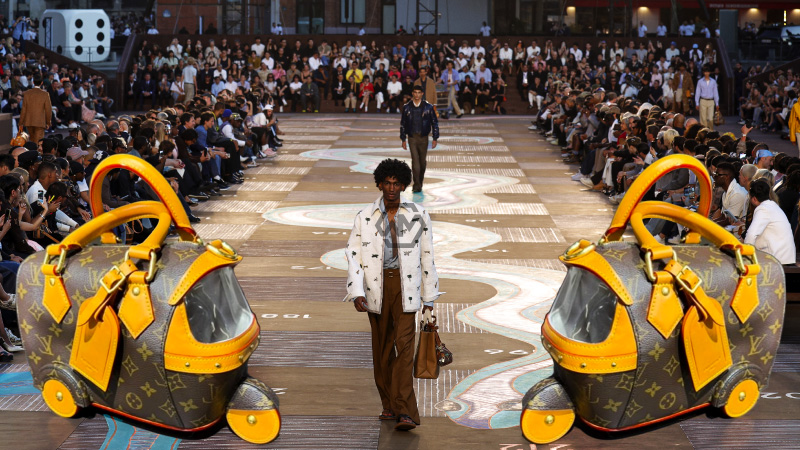
- Louis Vuitton unveils a handbag modeled after the Indian auto rickshaw at Paris Fashion Week.
- The ₹35 lakh accessory blends luxury fashion with everyday South Asian iconography.
- Netizens are divided, calling the piece both a tribute and a tone-deaf symbol of class contrast.
Louis Vuitton’s Spring/Summer 2026 menswear collection turned heads not just for its craftsmanship but for its audacious reinterpretation of everyday Indian life.
Creative director Pharrell Williams infused the collection with clear Indian influences beyond the rickshaw. The runway venue featured a colossal Snakes and Ladders-inspired board, created in collaboration with Indian architect Bijoy Jain.
When Fashion Meets Familiar: Louis Vuitton Turns India’s Rickshaw into a Luxe Handbag
Social media erupted with mixed reactions. Some applauded the creative risk, calling it a form of global recognition for Indian culture, while others saw it as another example of the West commodifying the East. The humorous and biting tone of comments like “Did this bag just colonise me?” highlights a broader unease about cultural symbols being plucked from their context and placed on pedestals—often without the communities they represent being part of the conversation.
The price tag only added fuel to the fire. At a staggering ₹35 lakh, the rickshaw bag became an ironic emblem of socio-economic disparity. For many Indians, the auto rickshaw is a lifeline—a modest, affordable means of daily travel. Seeing it elevated to a hyper-luxury product led some netizens to joke about waiting for a cheaper version in Delhi’s Chandni Chowk or Mumbai’s Linking Road.
Beyond the bag itself, the show’s aesthetic leaned heavily into themes of mobility, color, and cultural storytelling. Pharrell’s collaboration with Studio Mumbai was a nod toward architectural philosophy rooted in sustainability and local wisdom. The runway, resembling a traditional board game, symbolized the unpredictability and spiritual journey of life, resonating with the deeper meanings embedded in Indian mythos and design.
Fashion’s role as both mirror and provocateur is once again under scrutiny. While some may see this as a creative celebration of India’s influence, others argue for a more responsible and reciprocal exchange. The line between homage and appropriation remains razor-thin, especially when economic realities are repackaged for entertainment or exclusivity.
Louis Vuitton’s rickshaw handbag is more than a fashion moment—it’s a flashpoint in the ongoing dialogue between cultural reverence and representation. It proves that in global fashion, what we wear can also carry the weight of history, identity, and irony.
“Cultural appropriation is very different from cultural appreciation. One tears down, the other builds up.” – Luvvie Ajayi