
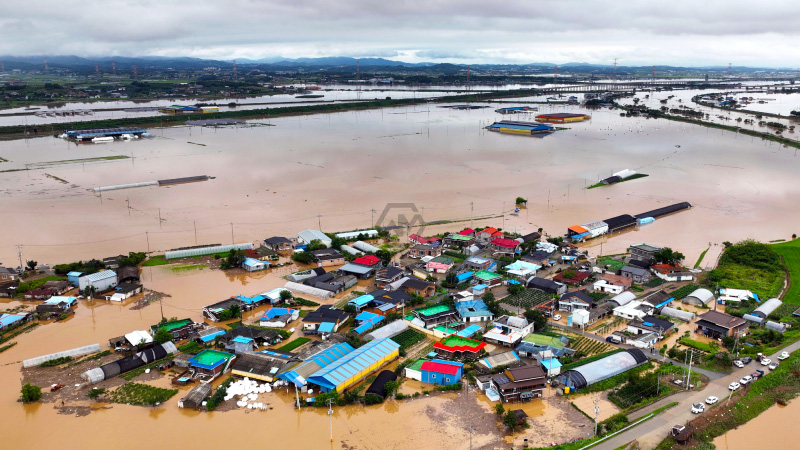
- Torrential rains hit South Korea for three consecutive days, killing four and leaving two missing.
- Over 5,600 residents were forced to evacuate due to flooding and landslides.
- President Lee Jae Myung urged stronger preventive measures amid record-breaking rainfall.
South Korea is grappling with severe weather chaos after unrelenting rains lashed the country for three straight days, leaving four people dead and two missing.
The city of Gwangju witnessed an unprecedented 400 mm of rainfall within 24 hours, marking the heaviest daily precipitation in 86 years.
South Korea Battles Deadly Downpour as Weather Crisis Escalates
Authorities confirmed that although 5,661 people had initially been evacuated, the number of those still in temporary shelters dropped to 3,297 by Friday morning. Rescue teams remain on high alert, especially in low-lying areas prone to flash flooding. Military personnel and civil workers have been deployed to aid in clearing debris and ensuring that blocked roads and drainage systems are reopened swiftly.
The Korea Meteorological Administration has kept most western and southern regions under heavy rain warnings. Landslides are a growing concern as saturated soil threatens to give way in mountainous and hilly terrain. Urban infrastructure, including subway systems and underpasses, has been affected, leading to transport delays and localized power outages.
Agricultural regions have also taken a major hit, with rice paddies and vegetable farms in the southern provinces submerged under water. Farmers expressed concern over crop failure, which could lead to economic losses and food supply disruptions. Provincial governments are beginning assessments to determine the extent of agricultural damage and offer compensation measures.
Citizens have been urged to avoid unnecessary travel and to stay updated through government emergency notifications. Social media has played a critical role in spreading safety information, with hashtags and videos showing flood conditions in real time. As emergency shelters fill, local volunteers are stepping in to provide food, blankets, and emotional support to displaced families.
As rains continue to hammer parts of South Korea, the nation faces a stern test of its emergency preparedness and community resilience. With lives lost and homes damaged, the priority now shifts to recovery, rebuilding, and learning from the disaster to better prepare for the future.
“By failing to prepare, you are preparing to fail.” — Benjamin Franklin
The recent events highlight the urgent need for proactive disaster management and infrastructure planning.