
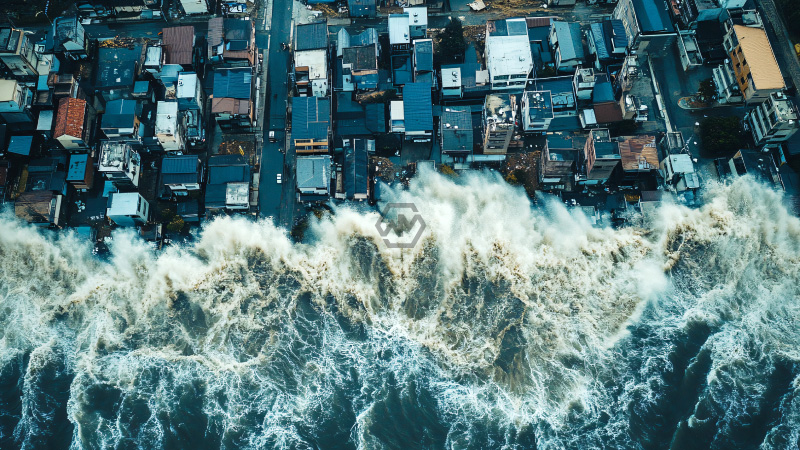
- A rare 8.8-magnitude earthquake struck Russia’s Kamchatka Peninsula, triggering tsunami warnings across the Pacific.
- Evacuations were ordered in Japan, Hawaii, and parts of the U.S. West Coast; no fatalities reported.
- Tsunami waves up to 4 meters were observed in Russia and expected in regions as far as French Polynesia.
A powerful undersea earthquake measuring 8.8 in magnitude rattled Russia’s remote Kamchatka Peninsula early Wednesday, sending ripples of concern across the Pacific Rim.
The seismic shock set off tsunami warnings stretching from Japan and Hawaii to Chile and New Zealand, prompting mass evacuations and precautionary shutdowns.
Aftershocks of the Deep: Pacific Braces as Russian Quake Triggers Global Tsunami Alerts
The Pacific Tsunami Warning Center (PTWC) quickly confirmed the threat, urging coastal communities to remain on high alert. In Hawaii, early morning sirens urged locals to move to higher ground, while in Alaska, emergency management teams activated contingency plans for coastal towns. Although the waves in these areas were less severe, typically under one meter, the rapid mobilization reflected the gravity of the potential threat.
In French Polynesia, the High Commission announced expected waves between 1.1 and 4 meters in the Marquesas Islands, with arrival times around 1:00 a.m. local time. Authorities warned residents on islands like Nuku Hiva, Ua Huka, and Hiva Oa to stay inland. These areas, while remote, are highly vulnerable to tsunamis due to their topography and proximity to tectonic fault lines.
Officials from Russia’s emergency services reported that all national tsunami alert systems operated effectively. The Kremlin commended regional response units, crediting well-drilled evacuation procedures with preventing loss of life. Local leaders emphasized continued vigilance as aftershocks and tremor clusters remain possible in the hours and days following the primary quake.
While no fatalities have been confirmed, the psychological and infrastructural impact remains significant. School holidays were disrupted in Japan as families fled beaches, while power and communications were temporarily interrupted in parts of Kamchatka. Meanwhile, environmental groups are closely monitoring the quake’s aftermath for potential ecological disturbances, particularly in sensitive marine zones.
This unprecedented seismic event underscores the interconnected nature of Pacific communities and the urgent need for global readiness against natural disasters.
“The Earth does not belong to us: we belong to the Earth.” — Marlee Matlin