
- Trump imposes sweeping tariff hikes on 95 countries, citing trade imbalances and national security.
- Canada, India, and Japan respond cautiously amid rising economic tensions.
- Global markets brace for ripple effects as the U.S. redefines its trade posture.
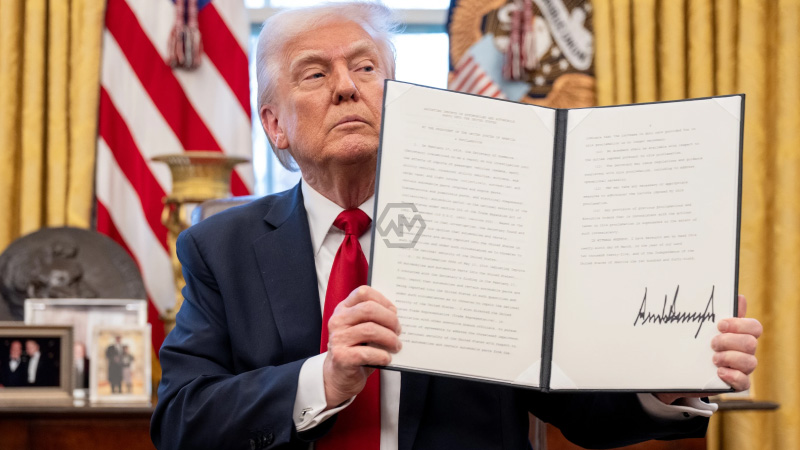
In a bold and controversial move, U.S. President Donald Trump signed an executive order raising tariffs on imports from dozens of countries, including major allies and trade partners.
India, slapped with a 25% tariff, is carefully weighing its options. While retaliation seems unlikely in the short term, defense purchases like the F-35 fighter jets are now on pause.
Economic Crossfire: Allies Recoil as Trump Reshapes U.S. Tariff Policy
Canada’s leadership emphasized that although the U.S.-Mexico-Canada Agreement (CUSMA) still offers some tariff protection, key sectors such as lumber, aluminum, and steel will take a hit. The Canadian government has announced intentions to “buy Canadian” and diversify exports beyond the U.S. market to reduce economic vulnerability.
The tariff overhaul has also ignited political drama at home, with President Trump clashing with a reporter over the timing of the move. When asked why he waited until his second term to invoke the emergency economic law, Trump fired back, accusing the press of undermining his first-term agenda. The exchange highlights the high political stakes attached to this new trade posture.
From a broader global perspective, countries like Syria, Laos, and Myanmar face some of the highest tariffs—over 40%. Meanwhile, favored nations like the UK and Brazil received relatively moderate rates. The executive order also includes a transshipment clause: goods rerouted to third countries to avoid tariffs will incur an additional 40% levy, effectively closing loopholes.
Trade analysts warn of potential disruptions to global supply chains. With the U.S. targeting nearly 100 nations and the EU bloc, businesses worldwide are likely to face increased costs, reduced export margins, and heightened uncertainty. Economists say the long-term effects could include inflationary pressures, slower growth, and realignment of trade alliances.
Trump’s tariff overhaul has redrawn the contours of international trade, pushing allies into a cautious recalibration and sending global markets into a state of flux.
“Trade wars are good, and easy to win.” – Donald J. Trump