
- China confirms the finalization of a new trade framework with the United States, tied to the Geneva consensus.
- The U.S. agrees to lift restrictive measures, while China pledges to ease export controls, including on rare earth elements.
- The move follows high-level talks in London and marks a cautious improvement in bilateral trade relations.
China’s Ministry of Commerce announced that Beijing and Washington have confirmed the structure of a new trade framework that builds upon negotiations held in Geneva earlier this year.
Talks resumed in London this month after earlier friction over delayed rare earth exports and tightening U.S. tech restrictions. This framework aims to stabilize the economic relationship, which had deteriorated during the height of the tariff war.
US-China Trade Truce: New Framework Targets Export Controls and Tariff Relief
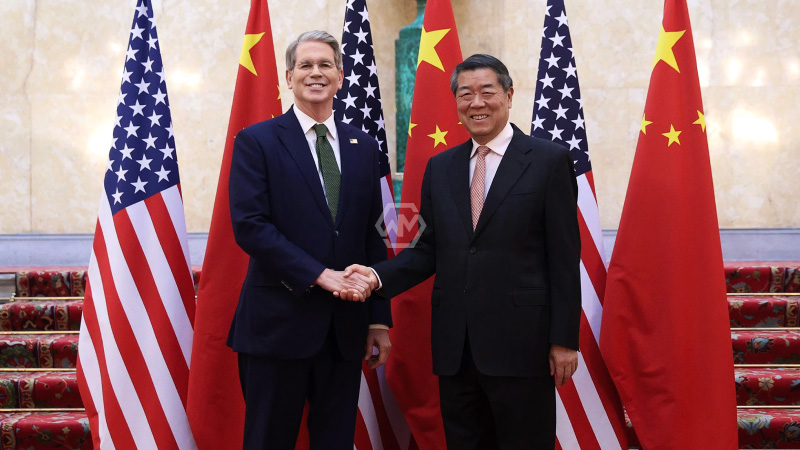
The framework emerged as a product of recent negotiations in London, led by U.S. Treasury Secretary Scott Bessent and Chinese Vice Premier He Lifeng. This followed months of tension where both nations accused each other of breaching the Geneva agreement, particularly regarding export licenses for critical materials.
At the heart of the trade deal are rare earth elements, which are essential in high-tech industries, including electric vehicles and defense manufacturing. China, the world’s largest producer, had imposed new licensing requirements in April, prompting concern in Washington over supply security.
President Donald Trump’s statement, “we just signed with China yesterday,” underscored the urgency to finalize the deal amid rising global economic uncertainties. While Trump offered limited details, U.S. Commerce Secretary Howard Lutnick later confirmed the agreement was signed and sealed earlier in the week.
Despite the positive signals, analysts caution that implementation will be key. Questions linger over the specific export categories China will ease and whether the U.S. will maintain pressure through other channels like tech sanctions or visa restrictions. Trade experts suggest both sides remain cautious but hopeful.
This agreement marks a measured step forward in U.S.-China trade relations, but its success will depend on transparency, enforcement, and mutual accountability.
“In the middle of difficulty lies opportunity.” — Albert Einstein